Redefining Lanzhou
  • Welcome
  • Sightseeing Suggestions
    • City Walks>
      • Half-Day Walk
      • Walk to Hualin Ping
      • Air Battle Memorial
      • Chaoyang Cun
      • Fulong Ping
      • Walk through Xujia Wancun
    • Mosques>
      • Xiguan Mosque
      • Lingmingtang Mosque
      • Nanguan Mosque
      • Waterside Mosque
      • Walk to Hualin Ping
      • Walk through Xujia Wancun
    • Temples>
      • White Pagoda Hill Park
      • Five Springs Hill Park
      • White Cloud Temple
      • Baolong Shan
      • Confucian Temple
      • Jiaolong Temple
      • Huang Miao
    • Parks>
      • White Pagoda Hill Park
      • Five Springs Hill Park
      • Lanshan Forest Park
      • Xinglong Shan
      • Xihu Park
      • Waterwheel Garden
      • Retired Officials Park
      • Bonsai Park and Flower-Fish Market
      • Wetland Park
      • Xujia Shan
    • Museums>
      • Gansu Provincial Museum
      • Lanzhou City Museum
      • Steles Forest
      • 8th Route Army Office
      • China Qinqiang Opera Museum
      • Lanzhou Painted Pottery Museum
  • Hotels
  • Air Train Bus
  • Listings
    • Imported food and drinks
    • Antiques, arts & crafts
    • CDs DVDs Books
    • Electronics & Mobile Phones
    • Teaching and Studying
    • Wi-Fi
  • Map
  • History
  • Overnight Excursions
    • Gansu>
      • Pingliang
      • Tianshui
      • Linxia
      • Bingling Si
      • Xiahe
      • Yellow River Stone Forest
      • Dunhuang
    • Qinghai>
      • Ta'er Si
      • Qinghai Lake
      • Yushu
    • Shaanxi
    • Sichuan>
      • Danba
      • Tagong and Bamei
      • Daofu
      • Lake Kashacuo
      • Lake Xinluhai
      • Manigange
      • Songgemani
      • Shiqu
  • Air Quality
  • Sights and Sounds
  • Contact

WELCOME TO LANZHOU

INTRODUCTION TO THE CITY

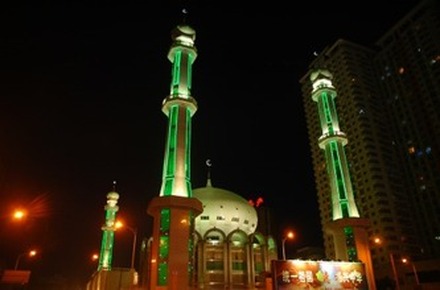
Lanzhou has certainly changed since the first foreign visitors started coming here 100 years ago. But the city retains it's distinct character due to its location along a narrow valley astride the Yellow River, and the visible Muslim culture. The river is never far away, and the hills to the north and south offer spectacular views from hilltop tea gardens. Looking down on the city you'll be sure to spot some mosques. The Hui Muslim population is small but very visible. There are Halal qīngzhēn (清真) restaurants on every street, and if you are nearby a mosque at prayer time, you'll hear the call to prayer.
In May 2010, Lanzhou won a 'Best International Tourist City' award, and in 2011 Lanzhou came second in the list of cities with best landscapes (China Institute of City Competitiveness). More Lanzhou news available here. 

Walking around the city really feels no different from walking around most Chinese city centres. There are pedestrian shopping streets, restaurants, bars, new department stores, and a big square (map). Again, like any typical Chinese city, Lanzhou has several parks, temples and museums.

There are no Starbucks or Macdonald's, but there are other western fast-food options (KFC, and China's 500th Pizza Hut) and several places to buy imported food and drinks. Local food, of course, is relatively cheap and varied, although you'd be forgiven for thinking that people in Lanzhou only ever eat beef noodles. Try these other noodles: huìmiàn (烩面), which are soupy, with lots of vegetables; zájiàngmiàn (杂将面), which uses a soya bean beef mince sauce; yángròu miànpiàn (羊肉面片), which is 'square noodles' with a lamb and vegetable soup.

HOW TO GET TO WHERE YOU WANT TO GO?

There are links to maps for many of the places on the site, especially in the locations covered in the pages listed along the top of the page. When there is no specific map link, click here to open the Redefining Lanzhou map. Scroll down the alphabetical index on the left, and click on the location you want to find.

Buses are cheap: Y1 - Y1.5 for most journeys. For bus routes, the best thing is to try to buy a city map (Y3.5) from a newsstand. Online bus information is available through the 'Get Directions' function on Google Maps. Instructions are available here. 
Taxis aren't too expensive either. The meter starts at Y7 for the first 3 km, and then it's Y1.4 per km after that. Y10 - Y15 can get you quite far in the city.
Train tickets: There is some good information here, and a map of ticket offices here. 


Create a free website with Weebly