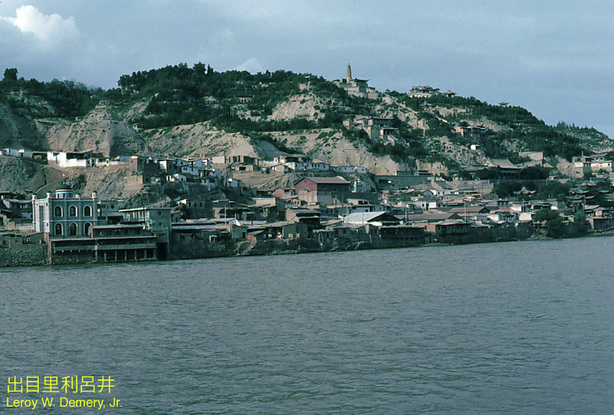
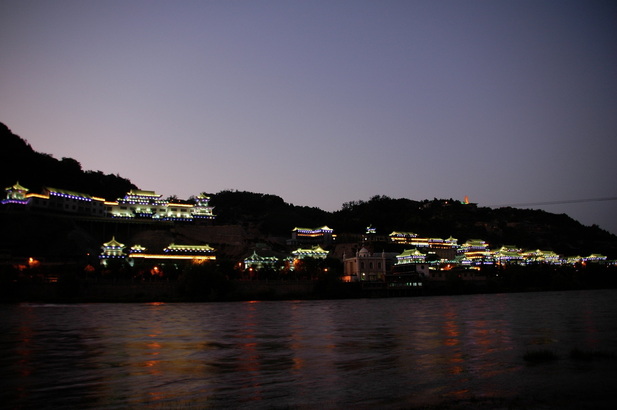
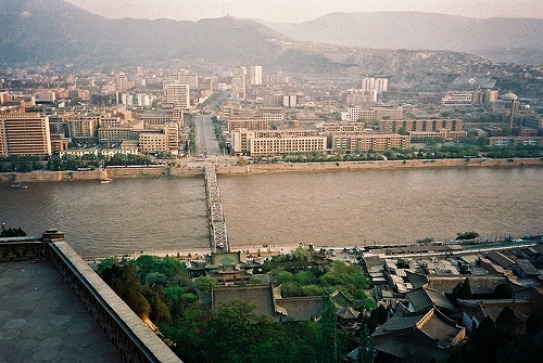
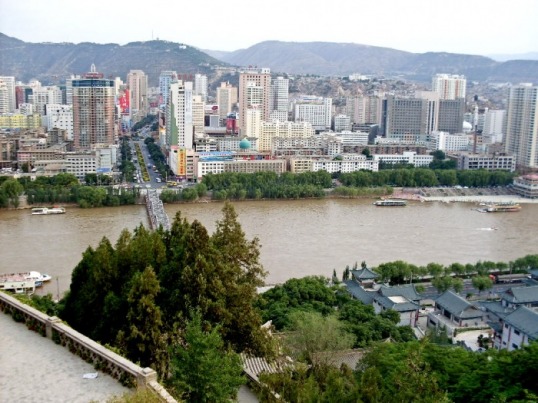
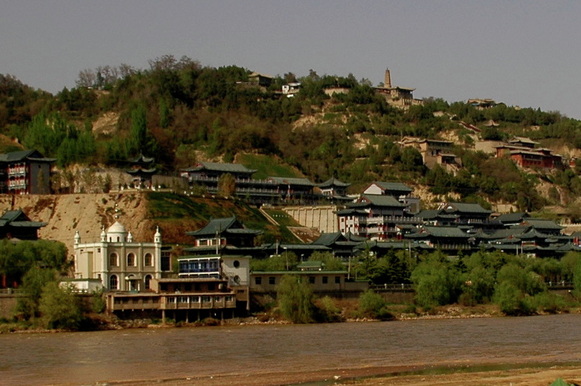
The Waterside Mosque and White Pagoda Hill, photographed from the south side of the Yellow River. The new hillside development is the Lanzhou 'Golden City Pass' Customs and Culture Quarter, home to the China Qinqiang Opera Museum.  

More historical photos here.
Picture
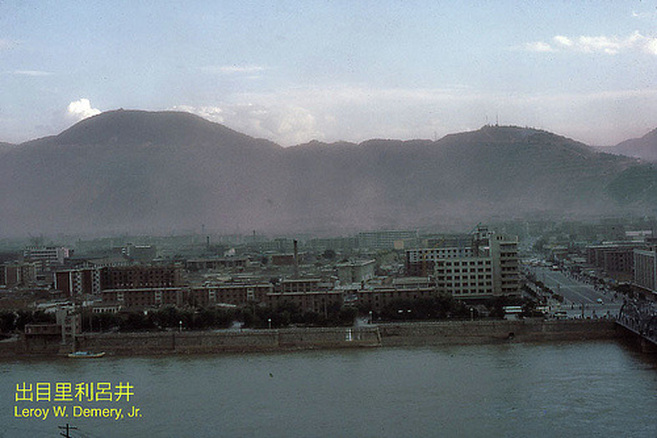
1983: Click photo for original source (Flickr)
Picture
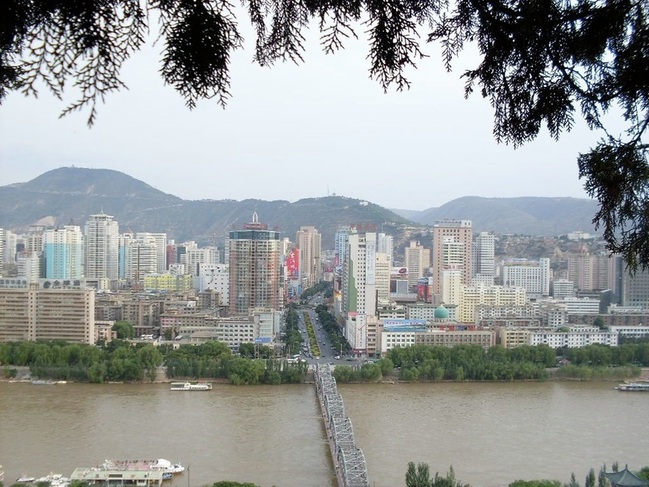
2009
Picture
2009
 

1983 vs 2009

03/09/2010

 
Two photos showing changes to Lanzhou during the period 1983-2009. As with the previous comparison (1994 vs 2009), Lanzhou is viewed southwards, from the vantage point of White Pagoda Hill

The 1983 photo is part of a fascinating 'Lanzhou 1983' set, published on Flickr by Leroy W. Demery, Jr

More historical photos here.
Picture
1983 (click to go to photo source)
Picture
2009
 
 
Picture
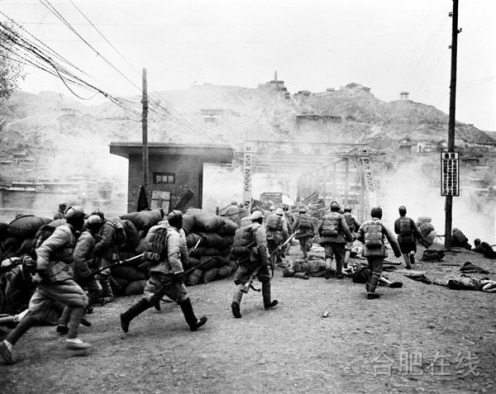
Fighting at Zhongshan Bridge (1949)
Picture
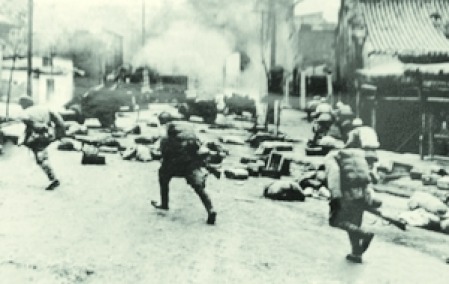
Fighting at Shuangchengmen (1949)
These dramatic photos were taken in Lanzhou during the Battle of Liberation (August 20-26, 1949), when the Communist army defeated the Nationalists. Over the course of a six-day battle, 8000 lives were lost. As part of the national celebrations of the 60th anniversary of the founding of the People's Republic of China, a film about this ("Lanzhou 1949"《兰州1949》) has just been released. 

UPDATE (27 Nov): You can watch a CCTV9 report about "Lanzhou 1949" here. Trivia: Compare the top photo above with the bridge scene in the film clip. It looks like they filmed on today's bridge, although it would have looked different in 1949. The bridge didn't get the rounded arches until 1954 (see page 6 of this article). There are more photos of the original bridge on the history map

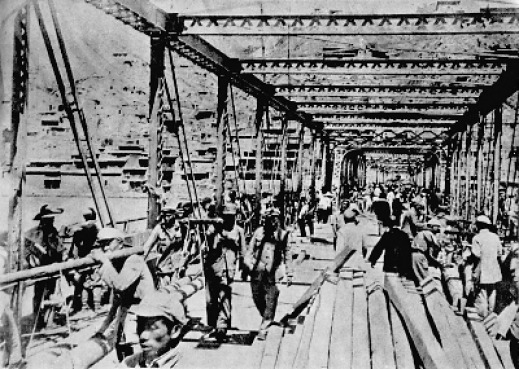
An additional bit of trivia: a nationalist truck containing explosives ignited and burned down the wooden sections of Zhongshan Bridge, cutting off the north and south banks of the Yellow River. This was first brought to my attention by Bill Schoerner, whose family lived in Lanzhou during the 1940s. He contacted me after an earlier post on this site ("Visitors to Lanzhou in the Early - Mid 1900s") featured his father, Otto Schoerner. He has kindly contributed his recollections:

"At the time of this incident I was four years old and living near the north bank of the Yellow River. My father was the business manager at the Borden Memorial Hospital where I was living with my parents and sister. My older brother was away at boarding school. The Zhongshan iron bridge was the only bridge then and the only route into the city on the other side of the river. One morning in August of 1949, we woke up to much commotion with the news that the bridge was on fire. I remember huge plumes of black smoke and being terrified of the events that were unfolding. While the bridge was being repaired, the only way to cross the river was on a raft made from inflated sheepskins. It is amazing that these photos have been found which confirm my recollections and that this event is being commemorated 60 years later."

In the following photo, you can see the repairs being carried out:
Picture
Repairing Zhongshan Bridge (1949)
These are just three of over 30 photos that I have mapped onto an online map of Historical Lanzhou, showing how today's sites looked several decades ago. See the History page, for more information.

Photos:
Fighting at Zhongshan Bridge: "Battle to Settle the fate of the Northwest"
Fighting at Shuangchengmen: "60 Years of Photos"
Repairing Zhongshan Bridge: "100 Years of Zhongshan Bridge - 10 Stories" (see page 5)
 

1994 vs 2009

11/06/2009


Thanks to simatani for letting me use this photo of Lanzhou city centre, taken in 1994. I've tried to recreate it below.

Picture
1994
Picture
2009


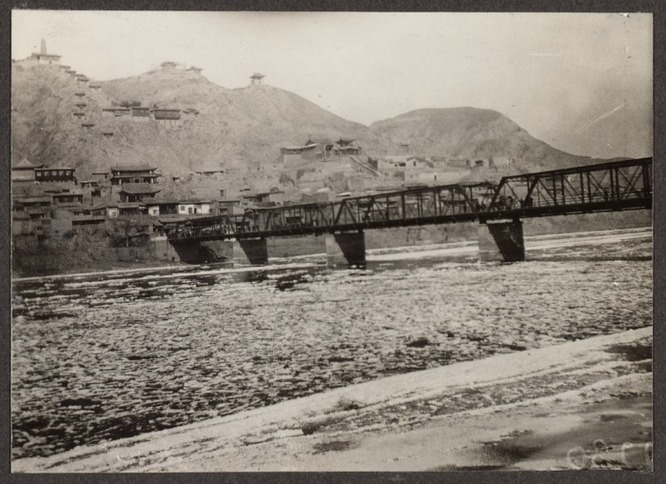
1914 - FRANK MEYER

Frank Nicholas Meyer (1875-1918) was an explorer for the United States Department of Agriculture. He went on several expeditions to Europe, Russia and East Asia collecting specimens (this lemon was named after him, for example).

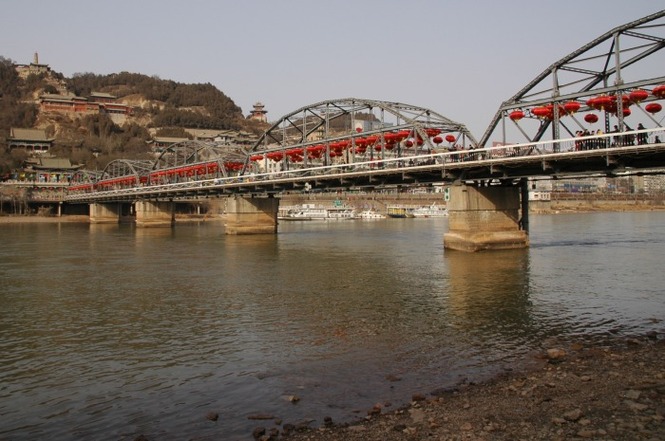
He was in Lanzhou in December 1914, and took this photo of Zhongshan Bridge (the arches were added in 1954, see page 6): 

Picture
“Iron bridge over a ice choked river with buildings on the hills in the background”
Picture
The scene in 2009
Meyer noted that “the water from this river is drunk unfiltered and the waste of the city is deposited into this river again, thus making the people immune from intestinal diseases unless they should die before.”  


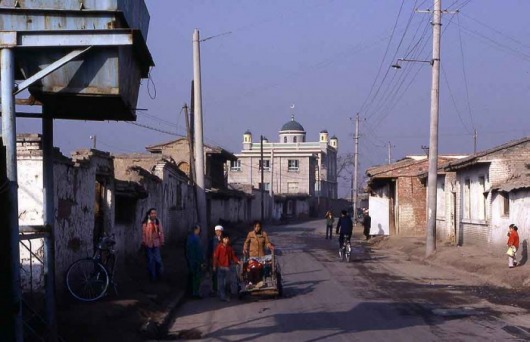
I stumbled across the website of Rolf Gross the other day, which has an incredible selection of photo-diaries, travel writing, and assorted essays. What caught my interest particularly was his description of a visit to Lanzhou in 1983.

The first photo on the page is of a sick child being wheeled along on a pushcart, with a mosque in the background. At first glance, I was pretty sure that I knew which mosque it was, and we confirmed this through a short correspondence, and by cross-referencing Rolf's route that day (along the north bank of the river upstream from Zhongshan Bridge) to another online photo

Rolf has given me permission to republish his photo of the 'Waterside Mosque' (水上清真寺) here. The photo was taken facing west, which means Rolf was standing midway between Zhongshan Bridge and the mosque: